Selenium daily requirement: 55, 60 or 70 µg?
Futures Nutrition Editorial Team · 12 August 2026
Anyone looking up the daily amount for selenium finds three different figures — and all three are correct, because they answer different questions. The German Nutrition Society (DGE) names 70 µg a day for men and 60 µg for women in adults. EFSA sets an adequate intake of 70 µg for all adults. And the 55 µg that every percentage figure on a pack is calculated against is not a recommendation but the nutrient reference value from labelling law: a single value for everyone, so that labels can be compared.
In practice this means: "100 % NRV" on a selenium pack is 55 µg and therefore below the value the DGE gives for men. Anyone who takes the percentage figure for their requirement is calculating too low.
Three figures, three origins
| Value | Where from | What it is meant for |
|---|---|---|
| 55 µg | Regulation (EU) No 1169/2011, Annex XIII | Labelling: reference amount for "% NRV" on the pack |
| 60 µg (women) / 70 µg (men) | DGE/D-A-CH, reference values 2015 | estimated value for an adequate intake in Germany, Austria, Switzerland |
| 70 µg | EFSA, adequate intake 2014 | European reference value, without distinction by sex |
| 255 µg | EFSA, UL 2023 | tolerable total intake per day, not a target but an upper limit |
The span between the requirement and the upper limit is narrower for selenium than for most other minerals — between 60 and 255 µg lies a good fourfold. With zinc the ratio is tighter still: a reference value of 7 to 16 mg faces a tolerable total intake of 25 mg, so that a single tablet such as our Zinc 25 mg + Vitamin B3 already uses up the room together with food. How that upper limit comes about is set out in Too much zinc: where the upper limit lies.
The DGE reference values at a glance
The values come from the 2015 revision and stand unchanged in the reference values for nutrient intake:
| Age / group | male | female |
|---|---|---|
| 0 to under 4 months | 10 µg | 10 µg |
| 4 to under 12 months | 15 µg | 15 µg |
| 1 to under 4 years | 15 µg | 15 µg |
| 4 to under 7 years | 20 µg | 20 µg |
| 7 to under 10 years | 30 µg | 30 µg |
| 10 to under 13 years | 45 µg | 45 µg |
| 13 to under 15 years | 60 µg | 60 µg |
| 15 years and older | 70 µg | 60 µg |
| Pregnant women | — | 60 µg |
| Breastfeeding women | — | 75 µg |
Two points about this stand out. For pregnancy there is no raised value: the additional requirement is, according to the DGE, so small that it cannot be represented in a figure of its own. For breastfeeding, by contrast, 15 µg are added on top — precisely the amount released with breast milk.
Why an "estimated value" and not a "recommended intake"
The DGE deliberately lists selenium as an estimated value for an adequate intake and not as a recommended intake. The difference is not hair-splitting: a recommendation presupposes that the requirement has been determined well enough experimentally to calculate a spread around it. With selenium it has not.
The value was derived in 2015 from the saturation of selenoprotein P in blood — a comparatively new marker that replaced what used to be the main criterion (the maximum activity of the selenium-dependent glutathione peroxidase). For this marker, data are so far available above all for adults; the values for children and adolescents were calculated from them via body weight and growth factors. What the revision actually brought was precision in presentation: before, ranges stood there, and since then concrete figures.
Why European soils have a say
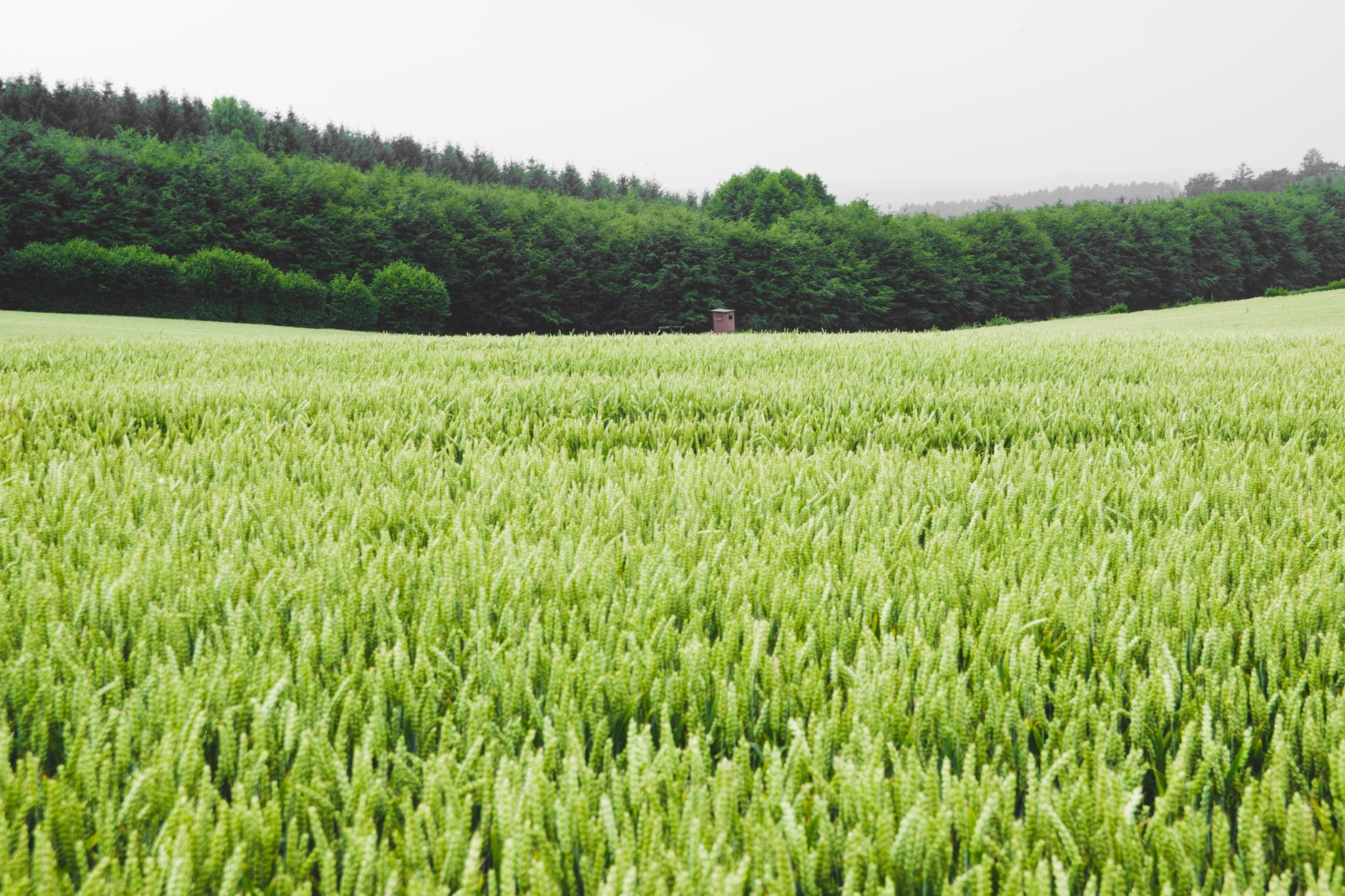
The selenium content of plant foods depends on the selenium content of the soil they grew in — and that varies strongly by geography. In Europe, soils tend to be poor in selenium. That is why cereals and cereal products are a good selenium source in the USA but only a weak one in Europe. The same variety of wheat supplies very different amounts depending on the growing region; the figure "x µg per 100 g" is therefore considerably blurrier for selenium than for other nutrients.
On the animal side things are different, and the reason is regulatory: animal feed may be enriched with selenium in the EU. Meat, eggs and fish thereby contribute relatively constantly to the supply, regardless of where the feed grain grew. That is precisely why animal foods count as the more reliable selenium source in Germany — and why vegetarians and above all people living vegan are on average less well supplied with selenium than omnivores.
Selenium is not the only item that gets thin at this point, but it is the most uncertain one. Vitamin B12 is reliably absent from a purely plant-based diet and is therefore supplemented without measurement — for instance with Vitamin B12 1000 µg. With selenium the situation is less clear-cut: intake is lower on average, but not necessarily below the reference value, because it depends on the choice of foods and not on the abstention itself. Which trace elements otherwise turn into an arithmetic exercise on a vegan diet is set out in Zinc on a vegan diet.
How much actually arrives in Germany, nobody knows exactly. The German consumption surveys did not record selenium, because the Bundeslebensmittelschlüssel — the nutrient database authoritative in this country — contains no selenium values. EFSA instead estimated intake from consumption data of several EU countries: 31 to 66 µg a day in adults, in men somewhat higher than in women because of the larger amounts eaten.
What 60 to 70 µg look like on the plate
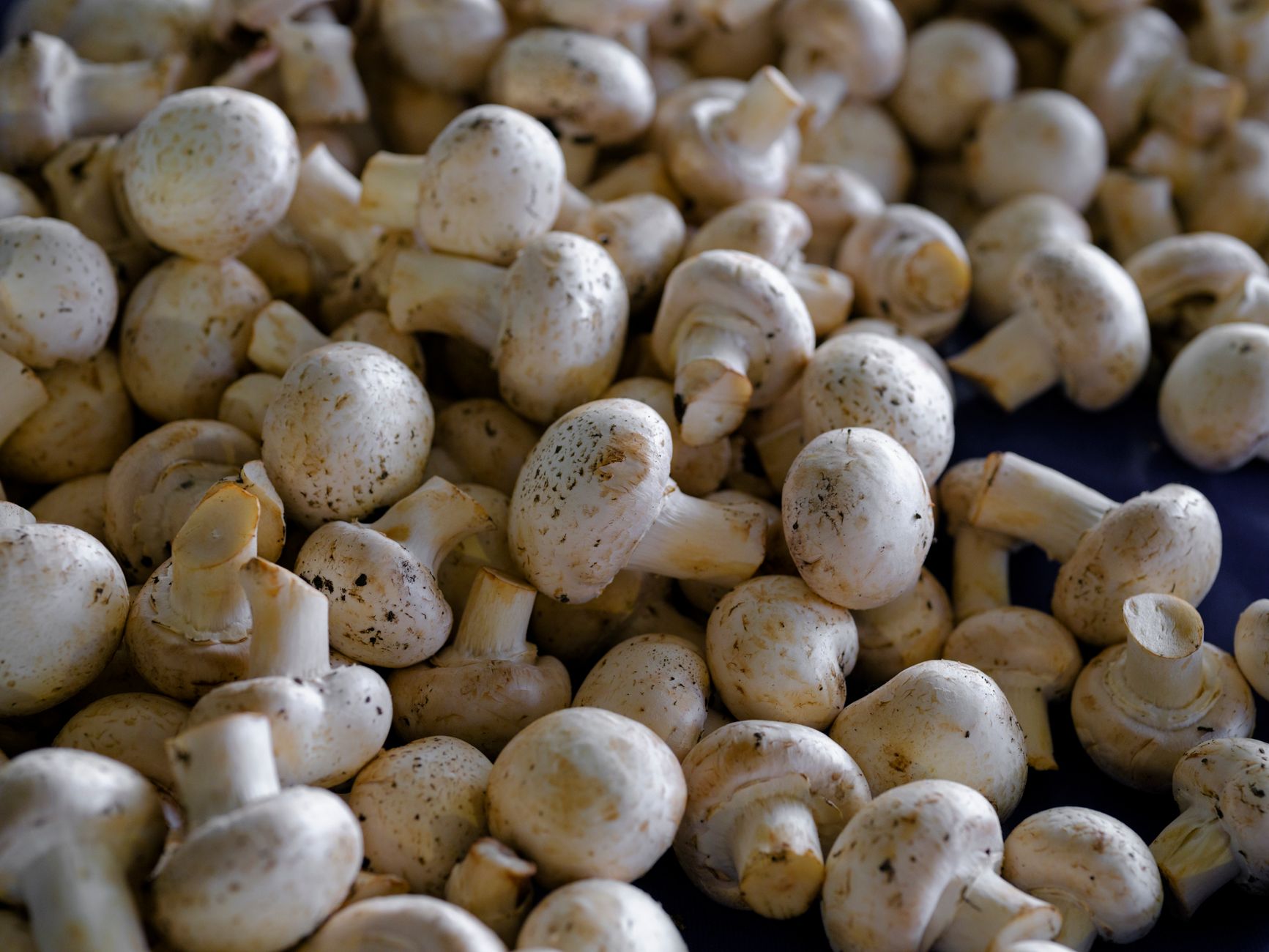
In its FAQ the DGE works through two example days, each based on the nutrient table by Souci/Fachmann/Kraut. The first, with animal foods, comes to 67.4 µg:
| Portion | Food | Selenium |
|---|---|---|
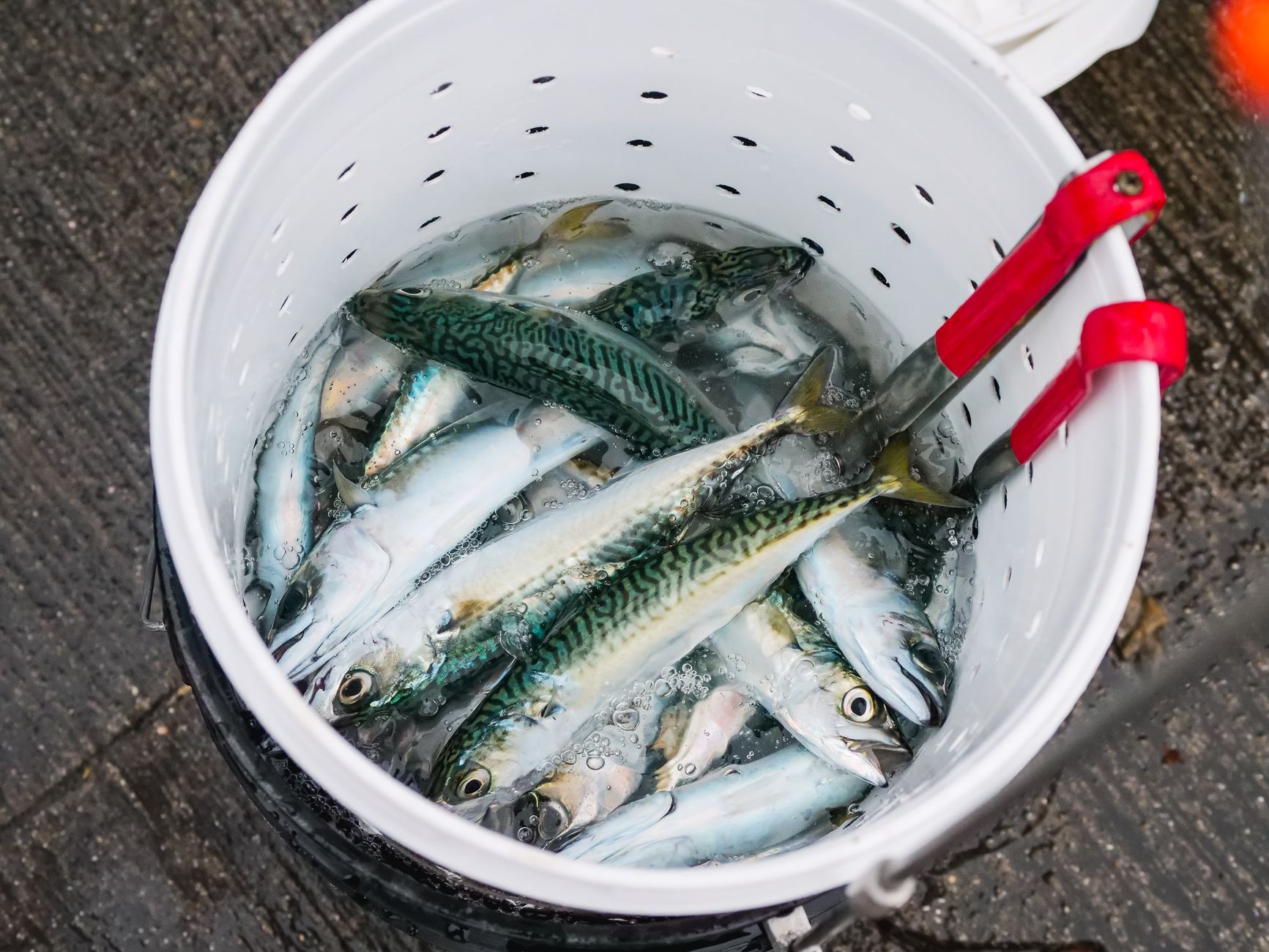
| 70 g | Mackerel | 27.3 µg |
| 250 g | Button mushrooms | 17.5 µg |
| 70 g | Rice, brown | 7.0 µg |
| 60 g (approx. 2 slices) | Emmental | 6.6 µg |
| 60 g (approx. 1 piece) | Egg | 6.0 µg |
| 100 g | Rye bread | 3.0 µg |
| Total | 67.4 µg |
The second example day, without fish and meat, adds up from oat flakes, yoghurt, a nut mix with two Brazil nuts, apple, potatoes, white cabbage, peppers, blackcurrants, lentils and rice to 55.8 µg — and thus just below the reference value for women. Both things can be read off it: the amount is achievable without fish, but it is spread over many small contributions, and no single item carries the day. For a plant-based diet the DGE therefore advises planning in cabbage and onion vegetables, mushrooms, asparagus and pulses regularly. That pulses and wholegrains bring a brake with them at the same time for other trace elements is set out in Zinc in foods.
Brazil nuts: plenty of selenium, but capped
The Brazil nut tree accumulates selenium strongly — 100 g of Brazil nuts contain around 103 µg. The daily requirement would thus be settled with a few nuts, were it not for a second substance: Brazil nuts also accumulate natural radioactive radium more strongly than other foods. The German Federal Office for Radiation Protection therefore advises against excessive consumption as a precaution; for pregnant and breastfeeding women, children and adolescents it advises against them entirely. As a unit of account for the daily requirement, the Brazil nut is therefore only usable in small amounts.
What is on a selenium supplement

The nutrient reference value for selenium is 55 µg (Regulation (EU) No 1169/2011, Annex XIII). Our Selenium 100 µg supplies 100 µg per tablet and thus 182 % NRV; the declared source is selenium-enriched yeast, and the recommended intake is one tablet daily after a meal. How this yeast differs from sodium selenite and pure selenomethionine is set out in Selenium forms: selenite, selenomethionine or selenium yeast?. Which other strengths exist is shown by the Selenium category; the remaining trace elements are next to it under Minerals. How two packs with different µg figures can actually be compared is set out in Buying a selenium supplement.
The following claims are authorised for selenium (Regulation (EU) No 432/2012): Selenium contributes to the normal function of the immune system. Selenium contributes to the normal thyroid function. Selenium contributes to the protection of cells from oxidative stress. Selenium contributes to the maintenance of normal hair and nails. Food supplements are not a substitute for a balanced and varied diet and a healthy lifestyle.
Upwards: 255 µg — and a considerably lower proposal
In 2023 EFSA lowered the tolerable upper intake level from the previous 300 to 255 µg a day for adults, including pregnant and breastfeeding women (EFSA Journal 2023;21(1):7704). The critical endpoint is hair loss — in the SELECT trial it occurred significantly more often after several years of 200 µg daily than under placebo. From this a LOAEL of 330 µg was derived and calculated down to 255 µg with an uncertainty factor of 1.3. For children and adolescents the values lie between 70 and 230 µg a day depending on body weight.
The German Federal Institute for Risk Assessment (BfR) proposes a considerably lower maximum amount for food supplements: 40 µg per daily consumption recommendation for people aged 15 and over (opinion 010/2024, which replaces the proposal of 45 µg from 2021). The calculation behind it is traceable: from the upper limit for 15- to 17-year-olds (230 µg) the intake of high consumers through the diet is subtracted (around 70 µg), the remainder of 160 µg is reserved by half for fortified foods, and the remaining 80 µg are halved once more because of possible multiple intake. This proposal is not a maximum amount in force — EU-wide, maximum amounts for minerals in food supplements have to this day not been laid down. Between the 40 µg of the BfR and the 255 µg of EFSA lies the whole range in which the strengths on offer move.
Frequently asked questions
The pack says 100 % NRV — have I covered my requirement with that? Not quite. 100 % NRV correspond to 55 µg. The DGE names 60 µg for women and 70 µg for men. The nutrient reference value is a calculation value for labelling, so that percentage figures remain comparable between products — not a target value for a particular person.
I eat vegan — is that enough for 60 µg? Arithmetically the value is achievable, as the DGE's plant-based example day shows; it does, however, land at 55.8 µg and thus just below it. Since animal foods are the more reliable source in Europe, people living vegan are on average less well supplied. What is decisive is less the amount on the plate than the selection: cabbage and onion vegetables, mushrooms, asparagus and pulses regularly.
Are 100 or 200 µg a day too much? Both amounts lie below the tolerable total intake of 255 µg, whereby intake through the diet counts towards it. The DGE points out that most preparations contain a maximum of 200 µg and that negative effects with intake as prescribed are therefore unlikely in Europe. The BfR's proposal lies considerably below that at 40 µg per daily dose — it is not a limit value, but it is the reason why some suppliers dose lower. How much the diet contributes to this is set out in Selenium in foods.
How does one notice a permanently excessive intake? By selenosis. Described are neurological disturbances, tiredness, joint pain, nausea and diarrhoea, and in the further course hair loss, disturbed nail formation and a garlic-like smell of the breath. The trigger is, according to the DGE, the permanent intake of very large amounts through preparations, not the normal diet.
Sources: DGE, selected questions and answers on selenium · DGE/ÖGE, Reference Values for Nutrient Intake, 3rd edition (2025), selenium reference values in the 2015 version · EFSA, Scientific opinion on the tolerable upper intake level for selenium, EFSA Journal 2023;21(1):7704 · EFSA, Dietary Reference Values for selenium (2014) · BfR, update (2023): proposed maximum levels for selenium in foods including food supplements, opinion 010/2024 · German Federal Office for Radiation Protection (BfS), notes on the consumption of Brazil nuts · Souci/Fachmann/Kraut, Food Composition and Nutrition Tables, 8th edition · Regulation (EU) No 1169/2011, Annex XIII · Regulation (EU) No 432/2012.