Selenium and iodine: why they are named together
Futures Nutrition Editorial Team · 12 August 2026
Anyone looking for selenium almost always ends up with iodine as well — in guides, in combination products, in forums. The reason is simple: both trace elements belong to the thyroid, but they do different things there. Iodine is the raw material the hormones are built from; selenium sits in the enzymes that convert them and protect the gland while doing so. Neither can be replaced by the other.
For everyday practice in Germany that already answers the more important half of the question: what is short here is iodine, not selenium. The German Nutrition Society (DGE) classifies Germany as a mild iodine deficiency area; according to data from the Robert Koch Institute, 32 % of adults and 44 % of children and adolescents are at risk of too low an iodine intake. A genuine selenium deficiency, by contrast, is rare. So anyone who wants to "do something for the thyroid" and reaches only for a selenium supplement has answered the second question and skipped the first.
Building material and tool — the difference in numbers
Thyroxine (T4) carries four iodine atoms, triiodothyronine (T3) three. Without iodine there is no hormone. Selenium works one level further on: it is a component of the deiodinases that convert T4 into the active T3, and of the glutathione peroxidases that clear away the hydrogen peroxide produced during hormone synthesis. Tools, in other words — very important ones, but they are no substitute for material.
| Iodine | Selenium | |
|---|---|---|
| Role in the thyroid | component of the hormones themselves | component of the enzymes that convert and protect them |
| Reference value for adults (DGE) | 150 µg/day (2025 derivation) | 60 µg (women) / 70 µg (men), estimated value |
| Pregnant / breastfeeding | 220 / 230 µg | 60 / 75 µg |
| Nutrient reference value on the pack | 150 µg | 55 µg |
| Tolerable upper intake level (UL) | 600 µg/day (adults) | 255 µg/day (EFSA 2023) |
| Maximum level proposed by the BfR for food supplements | 100 µg per daily recommended intake (150 µg for pregnant and breastfeeding women), opinion 065/2025 | 40 µg per daily recommended intake, opinion 010/2024 |
| Main sources | sea fish, iodised table salt, milk, cheese, eggs | meat, fish, eggs, cereals, mushrooms, brassicas and onions |
| Supply situation in Germany | median adult intake 126 µg/day, declining | mid-range in Europe, deficiency rare |
Two rows of this table matter most in practice. First: the gap between requirement and upper limit is four times as wide for iodine, at 150 versus 600 µg, as it is for selenium, at 60 versus 255 µg — with selenium the corridor is narrow, which is exactly why more micrograms are not the better buy: Buying selenium. Second: the maximum levels proposed by the German Federal Institute for Risk Assessment (BfR) are proposals, not binding limits — they state the amount the institute considers justifiable in food supplements, and for both substances they lie well below the UL because intake from an ordinary diet is added on top.
Why the order matters: iodine first, then selenium
That the two are named together has a concrete historical reason — and it argues against tackling them in any order you like. In northern Zaire, one of the most iodine-poor regions in the world, the population was short of iodine and selenium at the same time. When selenium was given there without improving the iodine supply, the thyroid values of participants who were already hypothyroid measurably deteriorated. The explanation: selenium gets the deiodinases going again, these break down the already scarce thyroxine faster — and the missing iodine for resupply is still not there. The authors recorded this in the title of their paper as a "possible danger of indiscriminate supplementation to iodine-deficient subjects" (Contempré et al., Journal of Clinical Endocrinology & Metabolism 1991;73(1):213–215; follow-up in Clinical Endocrinology 1992;36(6):579–583).
This observation comes from a situation of severe combined deficiency and cannot be transferred one to one to a household in Germany, where a mean intake of 126 µg of iodine is measured rather than 10 µg. The order that follows from it is nevertheless sensible and costs nothing: first sort out the iodine supply through food, then think about selenium — and not the other way round.
Where the iodine in everyday life comes from
Naturally iodine-rich foods in Germany are only those from the sea. Everything else carries iodine because it was added: in table salt, in the feed of cows and hens. The values below come from the DGE's questions and answers on iodine and are calculated for usual portions — the way a day actually adds up:
| Food | Portion | Iodine per portion |
|---|---|---|
| Cod | 120 g | 330 µg |
| Mozzarella | 100 g | 100 µg |
| Pollock | 120 g | 94 µg |
| Mascarpone | 30 g | 54 µg |
| Iodised table salt | 2 g | 40 µg |
| Milk, conventional | 250 ml | 30 µg |
| Mountain cheese | 30 g | 25 µg |
| Sheep's cheese | 30 g | 23 µg |
| Milk, organic | 250 ml | 15 µg |
| Egg, boiled | 60 g (1 piece) | 9 µg |
The difference between the two milk rows is striking: milk from organic farming often contains less iodine than conventional milk because of the different feed. Anyone switching to organic and changing nothing else lowers their iodine intake without noticing. The second point is the fish row: a single portion of cod covers the daily reference value twice over — which is why the recommendation is sea fish once or twice a week and not every day.
Iodised salt is the lever, not the supplement
The iodine content of iodised table salt is regulated by law and lies at 15 to 25 mg per kilogram of salt. Five to six grams of salt a day — roughly the amount regarded as the upper limit — yield around 100 to 120 µg of iodine from it. That is the largest single item you have in your own hands. Except: most of our salt does not come from the shaker but from processed foods, and there iodised salt is the exception rather than the rule. The German Federal Centre for Nutrition therefore advises looking for "Jodsalz" in the ingredients list and asking at the bakery or butcher. This point explains why the iodine supply in Germany is declining again despite iodised salt.
For pregnant and breastfeeding women the DGE recommends, in addition to a balanced diet with iodised table salt, a supplement of 100 to 150 µg of iodine daily — explicitly after consulting a doctor. We do not stock an iodine product; that question belongs in the consulting room anyway, not on the shelf.
Where seaweed products fall out of line
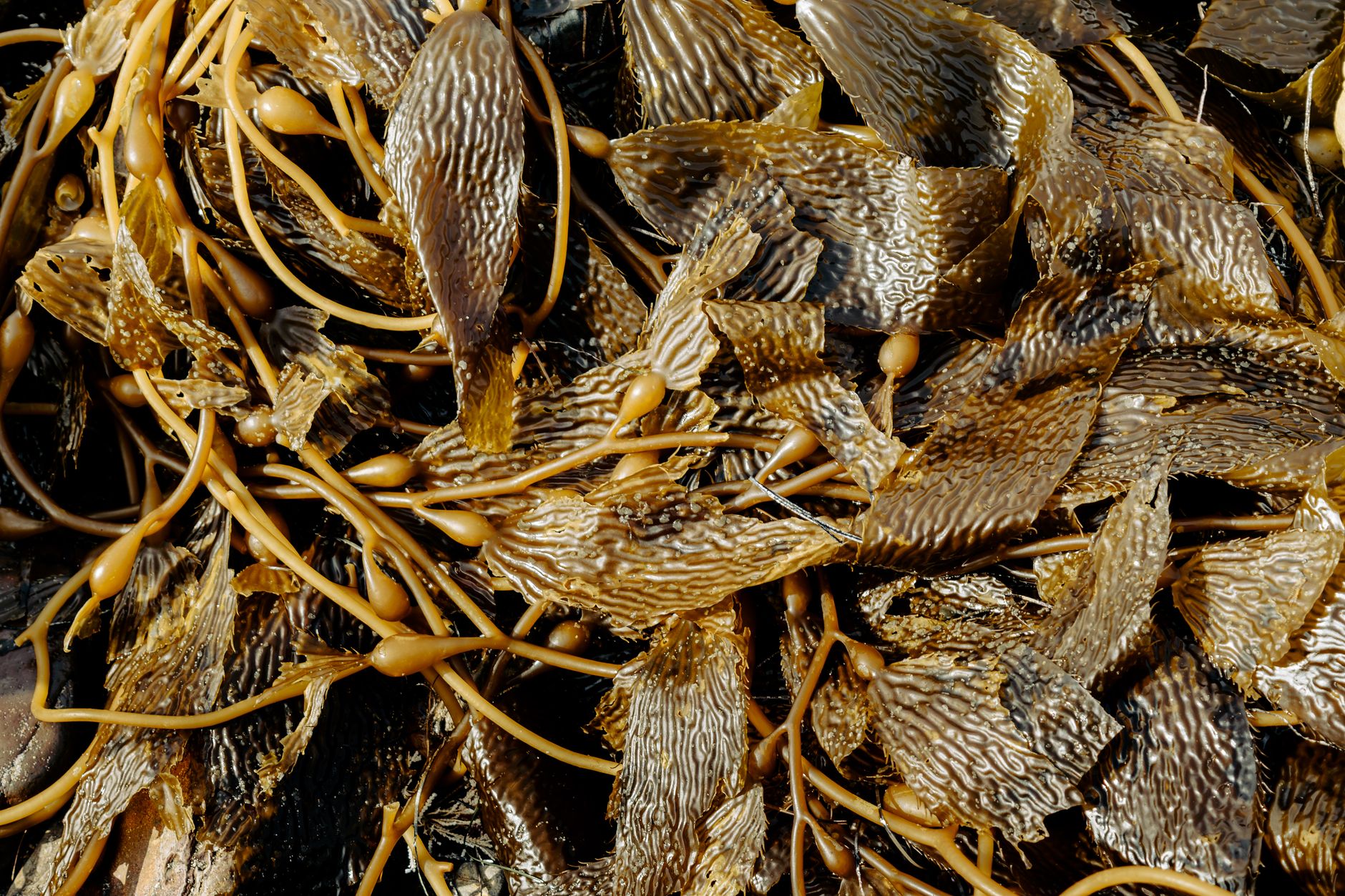
A special case are sea algae, kelp and food supplements made from them — they are readily sold as a "natural iodine source" and are the opposite of a doseable one. The iodine content of dried algae varies by several orders of magnitude; the BfR classifies dried algae products with more than 20 mg of iodine per kilogram as a health concern, and as little as 1 to 10 g of dried algae can clearly exceed the 500 µg regarded as the maximum daily intake. For comparison: the tolerable upper intake level for adults is 600 µg per day, for children between 200 and 500 µg depending on age.
A sushi evening with nori is not what is meant here. What is meant are powders, capsules and tablets made from kelp or bladderwrack, where neither the content nor its variation is stated on the pack.
And the selenium?
Once the iodine question is settled, selenium remains what it is: a trace element for which four claims are authorised (Regulation (EU) No 432/2012) — Selenium contributes to the normal thyroid function. Selenium contributes to the normal function of the immune system. Selenium contributes to the protection of cells from oxidative stress. And Selenium contributes to the maintenance of normal hair and nails. What exactly the first sentence covers and what large trials found in existing thyroid disease is set out in Selenium and the thyroid.

Our Selenium 100 µg supplies 100 µg per tablet as selenium-enriched yeast, that is 182 % of the nutrient reference value; the recommended intake is one tablet daily after a meal. Which other selenium compounds exist and how they differ is set out in Selenium forms: selenite, selenomethionine or yeast?; further strengths are listed in the Selenium category, the remaining trace elements under Minerals. Food supplements are not a substitute for a balanced and varied diet and a healthy lifestyle.
Common questions
Do I need a combination product with iodine and selenium? Most people do not. In Germany iodine enters the day through iodised salt, dairy products and sea fish — that is the route the DGE and the BfR describe. A combination product fixes both amounts, regardless of which of the two gaps actually exists. Anyone considering such a product should at least do the sum: 100 µg of iodine from the tablet plus a median intake of 126 µg from food is still clearly below the UL of 600 µg, but the calculation looks different with fish every day.
I take selenium — does that cancel out my iodine requirement? No. Selenium changes nothing about how much iodine the thyroid needs as raw material. It can support the conversion of the hormones, but it cannot replace the missing building block.
Can selenium do harm when iodine is short? This is documented from a region with severe simultaneous iodine and selenium deficiency (northern Zaire, 1991), where selenium doses worsened the thyroid values of people who were already hypothyroid. For a central European diet with a mean of 126 µg of iodine daily there are no comparable data. Anyone with thyroid disease or on medication settles the question with their doctor anyway.
Does one portion of sea fish cover both? For iodine yes, for selenium only in part. 120 g of cod bring 330 µg of iodine, more than twice the daily reference value; for selenium a portion of fish lies in the range of a few tens of micrograms — a 70 g portion of mackerel at around 27 µg. How much individual portions contribute is set out in Selenium in foods, and how the reference figures 55, 60 and 70 µg fit together in Selenium daily requirement.
Sources: DGE, reference values for nutrient intake, iodine (2025 derivation) and selenium · DGE, selected questions and answers on iodine, with portion values and Robert Koch Institute data on iodine intake · DGE, selected questions and answers on selenium (2021) · Regulation (EU) No 432/2012 · EFSA, Tolerable upper intake level for selenium, EFSA Journal 2023;21(1):7704 · SCF/EFSA, tolerable upper intake level for iodine (600 µg/day for adults) · BfR, opinion 065/2025 of 19 December 2025, proposed maximum levels for iodine in foods including food supplements · BfR, opinion 010/2024 (selenium) · BfR on iodine contents in dried algae products · German Federal Centre for Nutrition, checklist on iodine supply · Contempré et al., Effect of selenium supplementation in hypothyroid subjects of an iodine and selenium deficient area, Journal of Clinical Endocrinology & Metabolism 1991;73(1):213–215 · Contempré et al., Effect of selenium supplementation on thyroid hormone metabolism in an iodine and selenium deficient population, Clinical Endocrinology 1992;36(6):579–583.