Selenium on a vegan diet: plant sources
Futures Nutrition Editorial Team · 12 August 2026
The short answer: selenium can be covered from plants alone, but less reliably than most other nutrients — and the reason is not on the plate, it is in the soil. Plants take up only as much selenium as the site offers them, and that varies considerably across Europe. The same ingredient from two growing regions can contain very different amounts, with nothing about the food to show it. That is why the German Nutrition Society (DGE), in its position paper on vegan diets (2024), lists selenium among the potentially critical nutrients — alongside vitamin B12, iodine, protein, long-chain omega-3 fatty acids, vitamin D, vitamin B2, vitamin A, calcium, iron and zinc.
What that means in practice is shown by two kinds of figures: what was measured, and why the measurement itself is difficult.
What was actually measured in people living vegan
The largest analysis comes from the British EPIC-Oxford cohort: 30,251 participants, among them 803 vegans, surveyed with food frequency questionnaires (Sobiecki et al., Nutrition Research 2016;36(5):464–477).
| Diet | Selenium, men (µg/day) | Selenium, women (µg/day) | below the EAR of 45 µg |
|---|---|---|---|
| Meat eaters | 69.3 | 65.8 | 12.3 % / 14.4 % |
| Fish eaters | 72.0 | 63.6 | 11.9 % / 19.5 % |
| Vegetarians | 54.8 | 44.6 | 43.1 % / 60.4 % |
| Vegans | 62.1 | 51.7 | 32.7 % / 48.9 % |
Two findings matter more in practice than the average itself. First: almost every second vegan woman was below the average requirement, against roughly every seventh woman eating meat. Second — and this surprises most people — the vegetarians did worse than the vegans. People who drop meat and fish but stay with dairy often replace them with cereal products; people eating entirely plant-based reach more often for nuts, seeds and pulses. Vegan is therefore not automatically the weaker variant here.
The authors attach a warning of their own: consumption surveys are only of limited use for estimating selenium intake. That is not small print but the core of the topic — more on it below.
What the blood says
For Germany there is the cross-sectional study "Risks and Benefits of a Vegan Diet" (RBVD) by the Federal Institute for Risk Assessment (BfR), with 36 vegans and 36 omnivores aged between 30 and 60 (Weikert et al., Deutsches Ärzteblatt 2020;117(35–36):575–582). Two selenium markers were determined:
| Marker | Vegan (median) | Mixed diet (median) | p |
|---|---|---|---|
| Selenium in blood (µg/L) | 68 | 77 | 0.11 |
| Selenoprotein P (mg/L) | 3.3 | 5.0 | < 0.0001 |
Total selenium did not differ statistically — selenoprotein P clearly did. The transport protein is regarded as the more informative marker precisely at low intakes, and the study reads the finding as an indication of poorer selenium supply on a vegan diet. Which markers exist at all, and what a single value actually says, is in Recognising selenium deficiency.
Also striking is what the study does not contain: the table on nutrient intake lists calcium, zinc, iodine and iron — selenium is missing. The Bundeslebensmittelschlüssel, the German standard database, holds no selenium values. Selenium intake in Germany therefore cannot be calculated cleanly from a food diary, however carefully it is kept.
Why the soil has a say
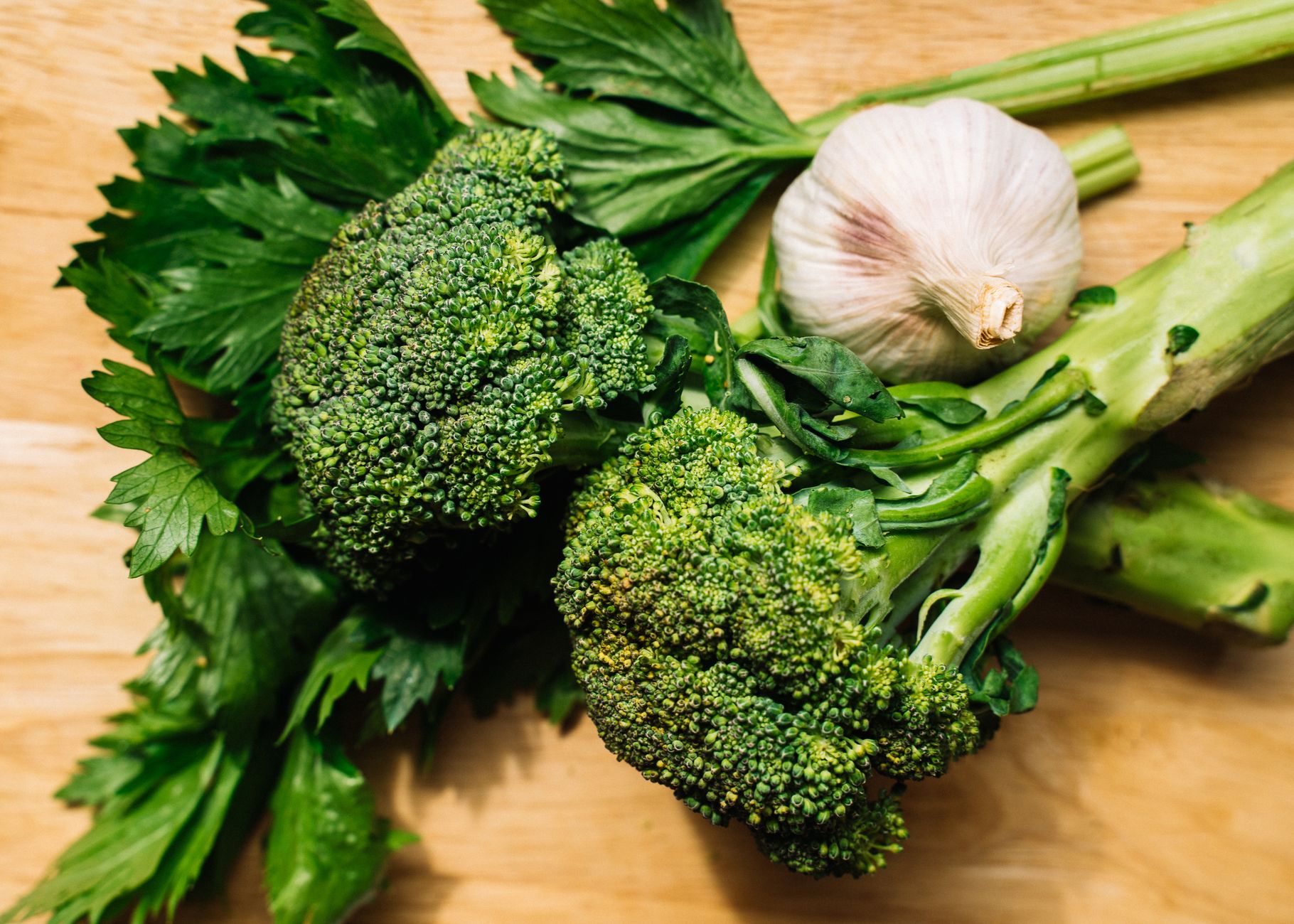
Selenium enters the plant through the root, and how much arrives there depends on the selenium content of the soil and on its pH. A Belgian survey of 695 field crops and vegetables from 539 sites found soil values between 0.14 and 0.70 mg of selenium per kg of dry matter — low throughout; among the field crops, wheat accumulated the most but still remained low on these soils (De Temmerman et al., Science of the Total Environment 2014). Brassicas and alliums can take up more, because in them selenium can chemically take the place of sulphur.
For Europe this means: the soils supply little, and where the animal side drops out, a buffer drops out with it. Animal feed may be enriched with selenium in the EU, which is why meat, eggs, fish and dairy deliver relatively constant amounts — regardless of where the feed grain grew. Plant foods have no such compensation. Which plant groups come into question at all and what a portion contributes is in Selenium in foods.
The Brazil nut: the tip with the widest spread
"Two Brazil nuts cover the daily requirement" is the standard advice in every vegan guide. It is true — sometimes. A study of nuts and soils from 71 Brazil nut trees in five Brazilian states found median contents from 2.07 mg per kg (Mato Grosso) to 68.15 mg per kg (Amazonas), that is more than twenty-fold; individual nuts ranged between under 0.5 and 146.6 mg per kg (Silva Junior et al., Chemosphere 2017;188:650–658).
| Origin | Selenium, median (mg/kg) |
|---|---|
| Mato Grosso | 2.07 |
| Acre | 2.52 |
| Roraima | 9.96 |
| Amapá | 50.93 |
| Amazonas | 68.15 |
The authors do the arithmetic directly: depending on origin, a single Brazil nut supplies between 11 % and 288 % of an adult man's daily requirement (70 µg). Even nuts from neighbouring trees differed by more than fivefold. None of this is on the pack in the supermarket — neither the state nor the content.
On top comes an upper limit that has nothing to do with selenium: the Brazil nut tree also accumulates natural radium, which is why the DGE recommends no more than two nuts a day and why the German Federal Office for Radiation Protection (BfS) advises pregnant and breastfeeding women and children against them entirely. The Brazil nut is thus usable as a side item, not as a unit of calculation.
What a plant-based day realistically adds up to
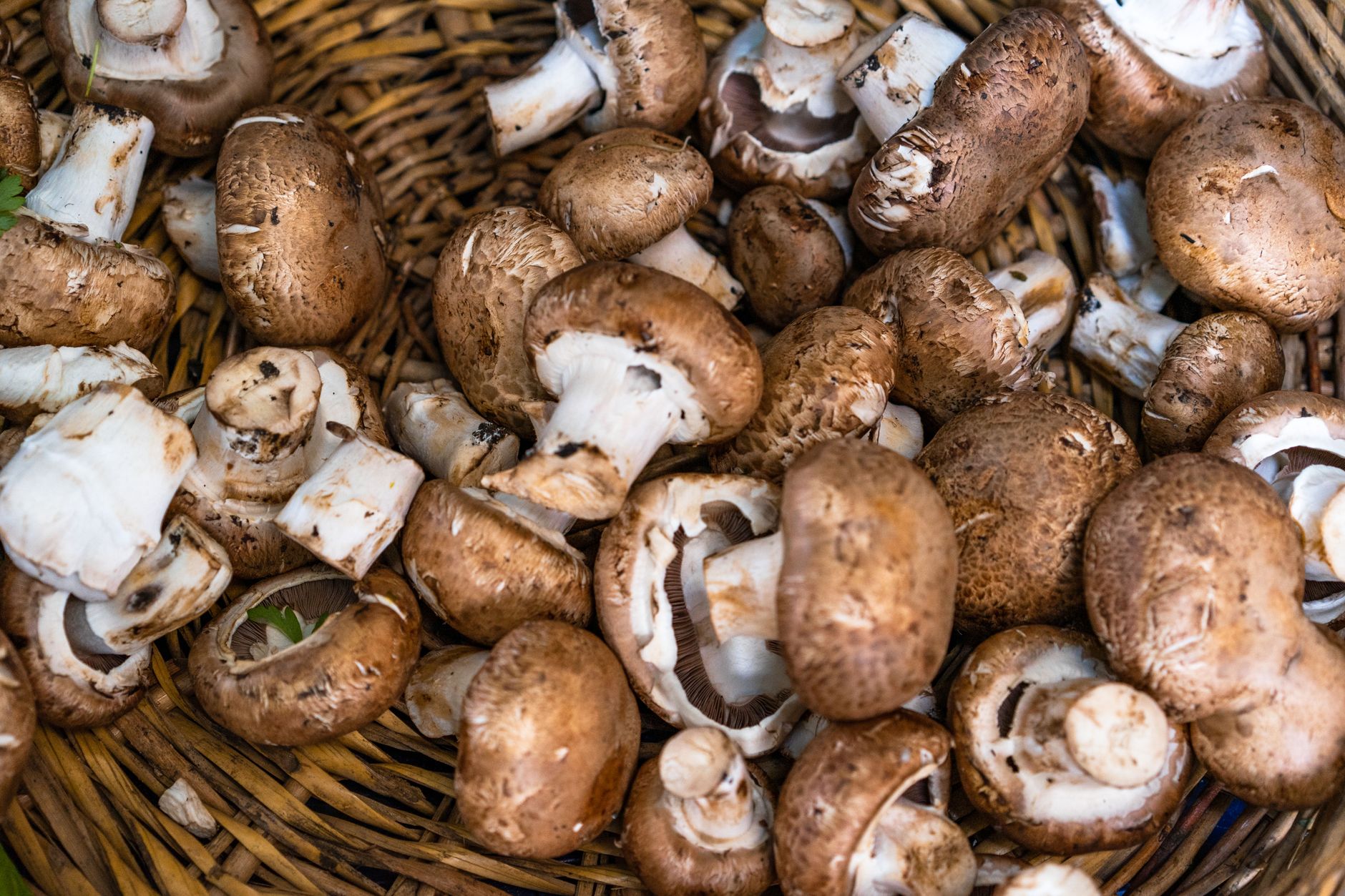
In its questions and answers on selenium, the DGE works through a purely plant-based example day; it comes to 55.8 µg and thus lands just below the reference value of 60 µg for women. It is carried not by a star item but by ten to twelve small contributions: rolled oats, wholegrain bread, lentils, brown rice, button mushrooms, broccoli and white cabbage, garlic and onions, asparagus, plus a small portion of nuts.
That is the real answer to the question "which food should I eat": none on its own. What makes sense is to plan in the groups that accumulate selenium — brassicas and alliums, mushrooms, pulses, wholegrain cereals — instead of aiming at a number from a table that was measured for a different growing region.
If you supplement: the declaration decides

With selenium itself the question of animal origin hardly arises: the sources permitted in the EU are either inorganic salts such as sodium selenite and sodium selenate, or selenium from selenium-enriched yeast — yeast is a fungus, not an animal. What distinguishes the forms in the body is in Selenium forms compared.
The trickier part are the excipients, and they are in the small print:
- Capsule shell: gelatine comes from animal connective tissue, HPMC (hydroxypropyl methylcellulose) from cellulose. Tablets do not have this problem.
- Anti-caking agents: "magnesium salts of fatty acids" and magnesium stearate can be produced from vegetable or from animal fat. The ingredients list does not say which — only a manufacturer's declaration or an enquiry does.
- Coatings and colours: shellac comes from lac insects, carmine (E 120) from cochineal insects.
Our Selenium 100 µg supplies 100 µg per tablet from selenium-enriched yeast; alongside it, the ingredients list the bulking agent cellulose and magnesium salts of fatty acids as an anti-caking agent. Further products are shown by the Selenium category, the remaining trace elements are under Minerals.
There is headroom, but not much: in 2023 EFSA derived a tolerable total intake of 255 µg of selenium per day for adults. The distance between requirement and upper limit is smaller for selenium than for most other trace elements — a supplement on top of several Brazil nuts a day is therefore not a good idea.
The following claims are authorised for selenium (Regulation (EU) No 432/2012): Selenium contributes to the normal function of the immune system. Selenium contributes to the normal thyroid function. Selenium contributes to the protection of cells from oxidative stress. Selenium contributes to the maintenance of normal hair and nails. Food supplements are not a substitute for a balanced and varied diet and a healthy lifestyle.
Frequently asked questions
Do I have to supplement selenium as a vegan? Not as a blanket rule. The DGE lists selenium as a potentially critical nutrient, but — unlike with vitamin B12 — issues no general recommendation to supplement. What actually arrives depends on the choice of foods; anyone who wants to know precisely has it measured instead of estimating. The nutrient for which supplementation belongs to a vegan diet without reservation is vitamin B12.
Are two Brazil nuts a day really enough? Arithmetically yes, in practice unreliable. Between nuts from Mato Grosso and those from Amazonas lies more than a factor of twenty, and the origin is not on the pack. Because of the natural radium content, two pieces are the daily maximum the DGE names anyway — so the portion cannot simply be increased if the nuts are low in selenium.
Why were the vegetarians below the vegans in the EPIC study? Because dairy products in Britain do supply selenium, but little per portion, and because people living vegan eat more nuts, seeds and pulses on average. The difference shows that it is less about what is left out than about what moves into its place.
Can I calculate my selenium intake with an app? Only very roughly. The Bundeslebensmittelschlüssel contains no selenium values, so German apps calculate with foreign sources or not at all; and the EPIC authors expressly consider consumption surveys unreliable for estimating selenium. The choice of foods is the sturdier lever than the total at the bottom of the diary.
Sources: DGE, position paper on vegan diets (2024) · DGE, selected questions and answers on selenium (March 2021) · Sobiecki JG et al., Nutrition Research 2016;36(5):464–477 (EPIC-Oxford) · Weikert C et al., Deutsches Ärzteblatt International 2020;117(35–36):575–582 (RBVD study of the BfR) · Silva Junior EC et al., Chemosphere 2017;188:650–658 · De Temmerman L et al., Science of the Total Environment 2014;468–469:77–82 · EFSA, Scientific opinion on the tolerable upper intake level for selenium, EFSA Journal 2023;21(1):7704 · German Federal Office for Radiation Protection (BfS), natural radionuclides in Brazil nuts · Regulation (EU) No 432/2012.